

Tower Rush Strategy Guide: Cashing Out Early
In short: No strategy shifts the odds in Tower Rush. A plan only fixes two things: what you stake and when you stop. We logged 8 builds in the demo testing that discipline, and none of them made a collapse predictable.
No strategy for Tower Rush can bend the odds in this Galaxsys crash game. The strategy only fixes the moment you cash out. Across 8 demo rounds recorded on , 6 towers collapsed within 5 floors, and the 2 builds we banked returned 0.87x and 1.24x on a 1 Fun stake.
- Game:
- Tower Rush (a Galaxsys crash / Fast Games instant game)
- Type:
- Crash game
- RTP as published:
- 96.2%-97.6% (operator-configurable range)
- Max win:
- No fixed cap published; the game client shows an "Unlimited" maximum coefficient, so any hard multiplier you see elsewhere is an operator cash cap, not the game's
Note: Every floor in Tower Rush is drawn by a quantum random number generator (RNG). Galaxsys publishes an operator-configurable return-to-player (RTP) band of 96.2% to 97.6%, and the host casino picks the setting inside it, so a guaranteed system stays out of reach. The mistake to avoid is treating a lucky build as a method.
What a strategy does change is exposure. That comes down to three decisions: the stake you commit, the multiplier you accept, and the second you press Cashout on a tower that is still standing.
Our analyst opened the official Galaxsys demo and logged 8 builds at 1 Fun each. Exactly 2 of those builds survived long enough to be banked. Exit timing was the only lever that moved the play balance, which is why this guide spends most of its length on exits.
Table of contents
- What You Need Before You Start
- How a Round Plays, Step by Step
- Before Your First Round Starts
- Setting a Target Before the Round
- Hitting the Target During a Build
- After the Build Ends, Before the Next
- Eight Tower Rush Builds, Logged
- Cash-Out Targets This Strategy Supports
- Bankroll Math Behind a Tower Rush Exit
- What the Host Casino Sets Around a Game
- Bonus Floors Inside a Tower Rush Build
- Fairness Behind Every Tower Rush Floor
- Where the Tower Rush Plan Falls Short
- Our Tower Rush Verdict After 8 Builds
- Key Terms Used on This Page
- What Else Do Readers Ask
What You Need Before You Start
Before you start, check these prerequisites; each one takes a minute and saves a wasted round.
- A phone or laptop browser, because the game installs nothing on either device.
- The free Galaxsys demo, which asks for no deposit and no account.
- A bankroll you can lose, plus a loss cap you can actually see.
- An exit multiplier chosen before the crane moves.
- For real stakes, an age-verified 18+ account at a licensed online casino.
How a Round Plays, Step by Step
Follow these steps in order; the index below jumps to any step, and each step names the control it uses.
Before Your First Round Starts
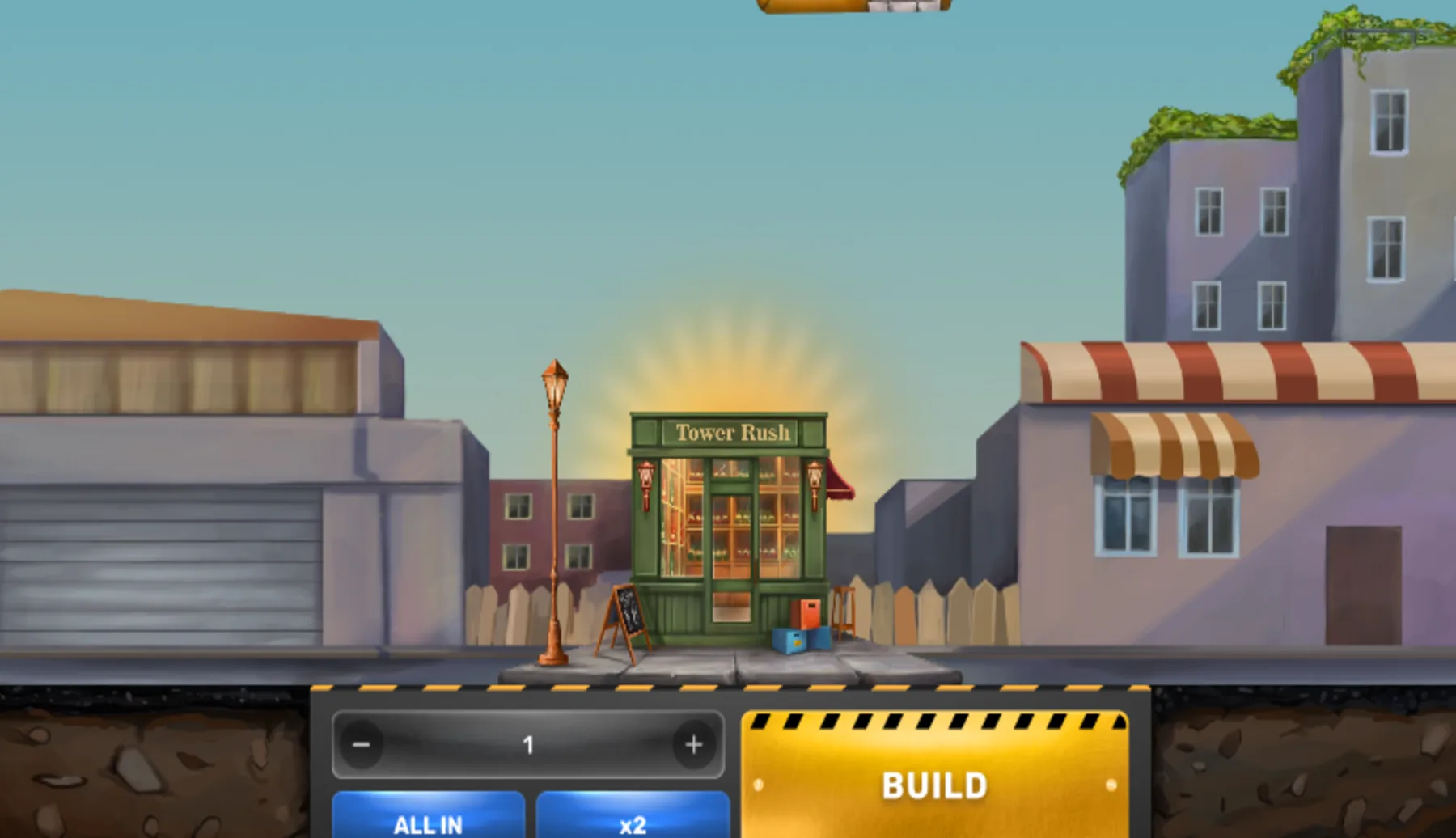
Step 1: Practice Inside the Demo
Load the official Galaxsys launcher, stack floors on the 100,000 Fun play balance, and learn how a collapse feels while nothing is at risk.
Step 2: Read the Information Panel
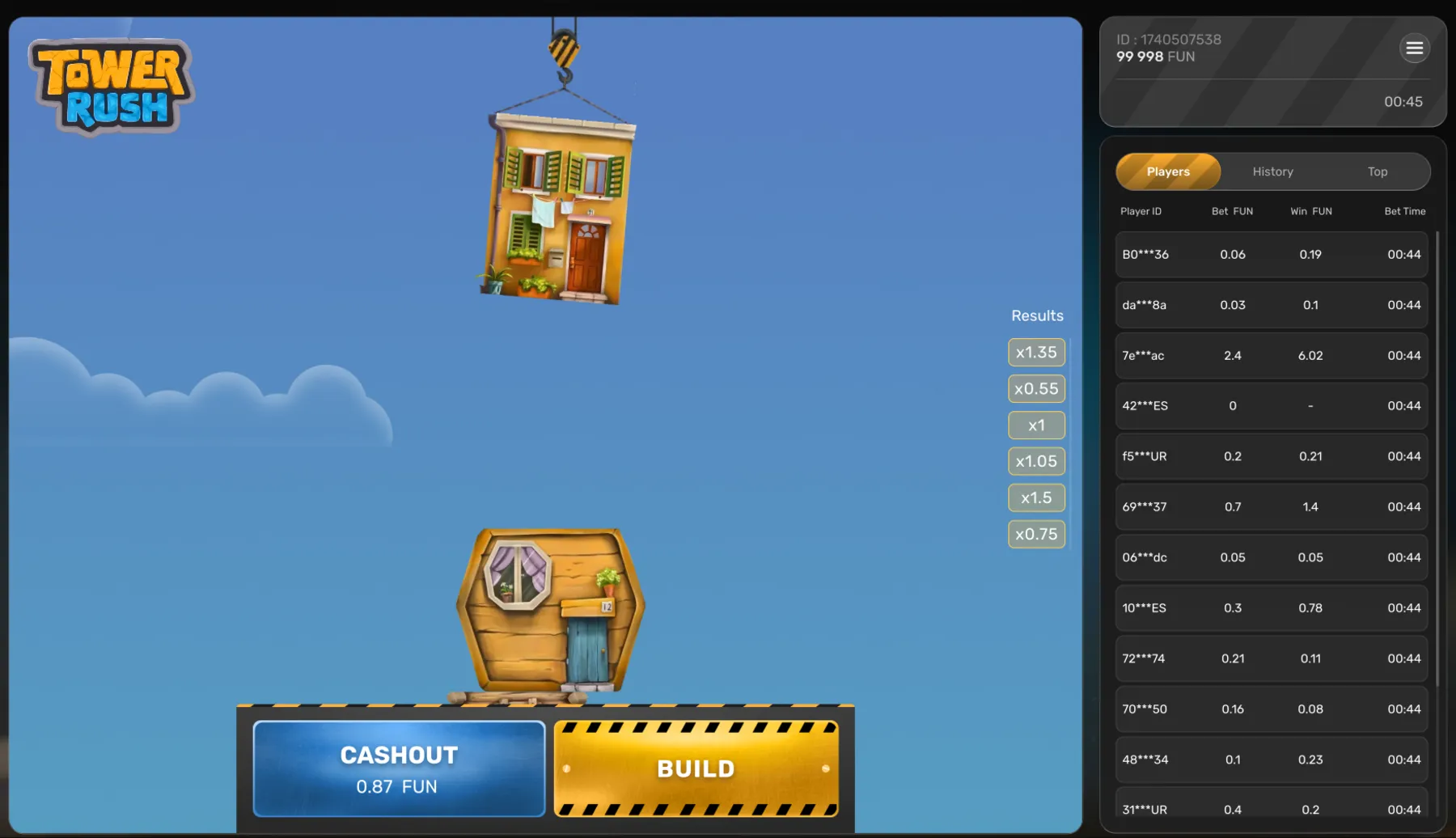
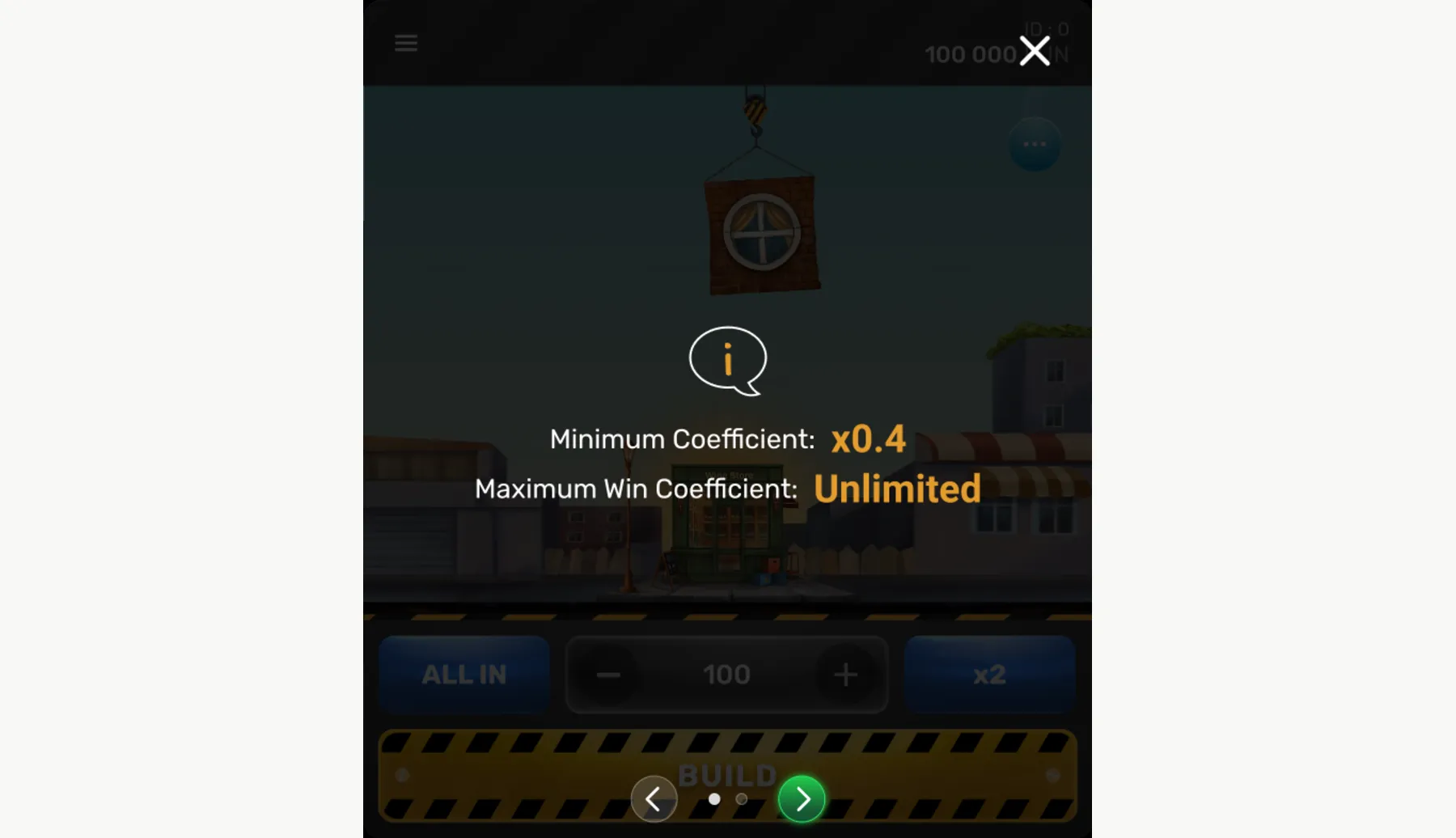
Open the panel and note the two numbers that frame every round: a Minimum Coefficient of x0.4 and a Maximum Win Coefficient printed as "Unlimited."
Setting a Target Before the Round
Step 3: Predetermine Your Multiplier
Predetermine the exit multiplier and write it down; this strategy leans on a modest 1.5x to 2x cash-out band far more than on a tall-tower ambition.
Step 4: Proportion Every Stake
Proportion each build to a hundredth of the money you brought, because this format drains a budget in bursts and not in a straight line.
Hitting the Target During a Build
Step 5: Cash Out Manually
Cashout is a manual button, so tap it immediately when your number appears, since one misaligned slab takes the whole structure to zero.
Step 6: Discount the Bonus Floors
Bonus floors deserve no place in a plan. Frozen, Triple Build, and Temple slabs appear in random rounds only, so budget an evening on the assumption that the Temple wheel stays away.
After the Build Ends, Before the Next
Step 7: Record Everything Afterwards
A session record is the last step. Track wins and losses as you go, then quit right away when the loss cap arrives; a memoryless generator owes you nothing.
Eight Tower Rush Builds, Logged
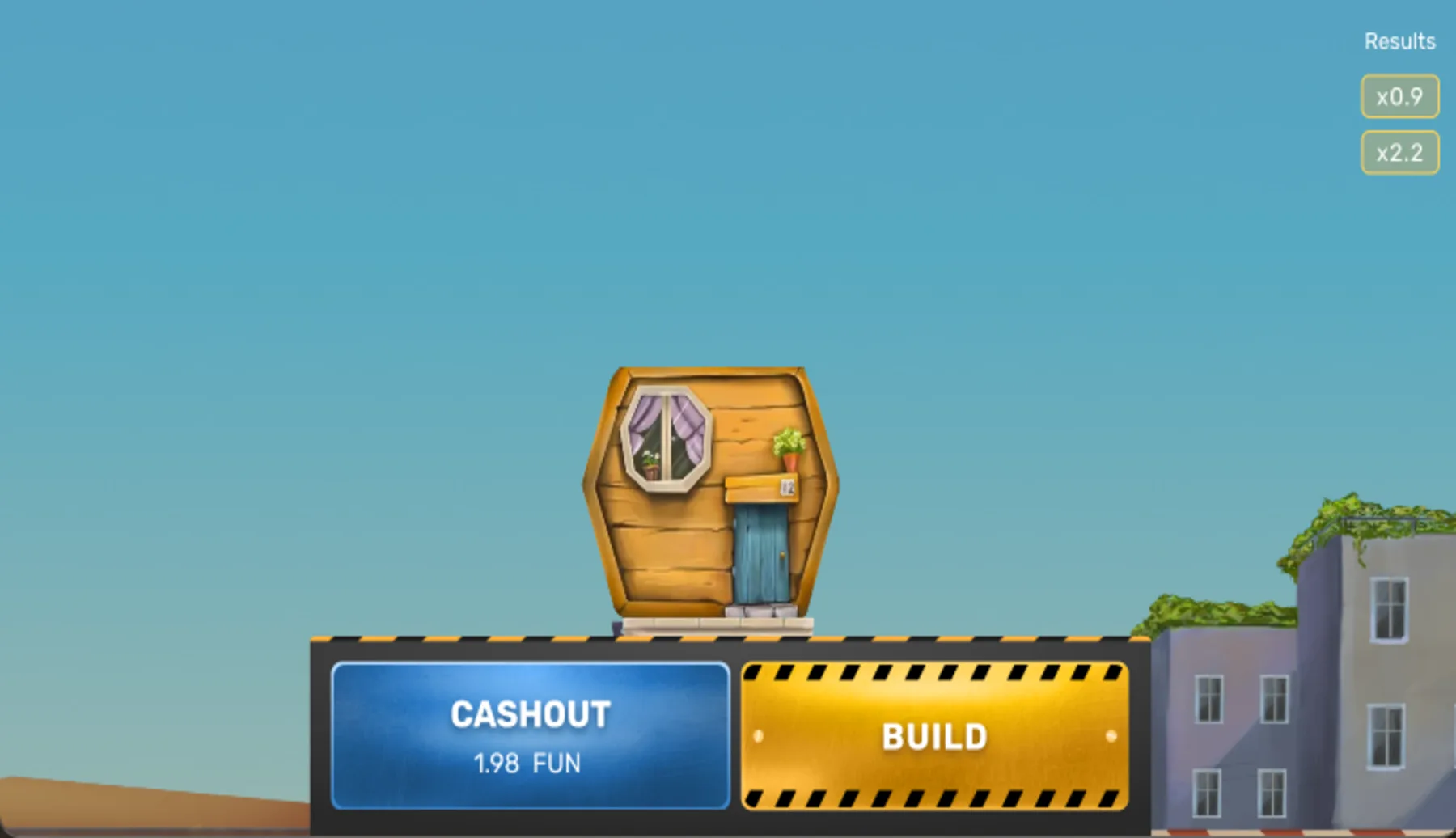
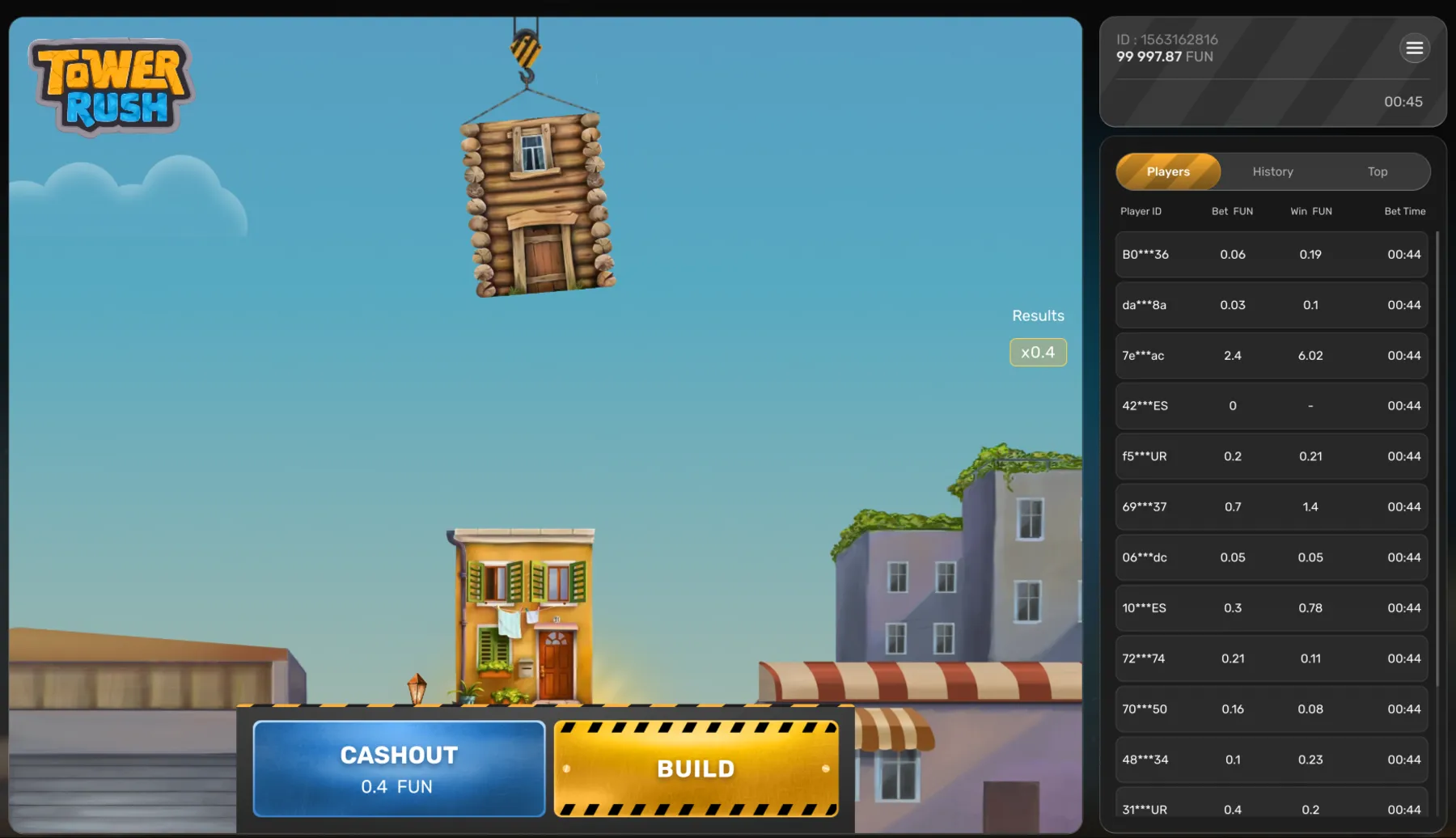
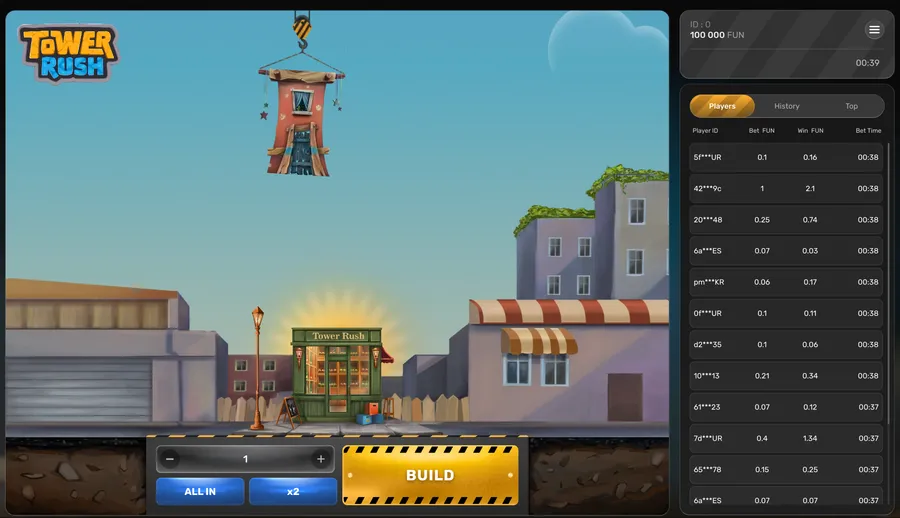
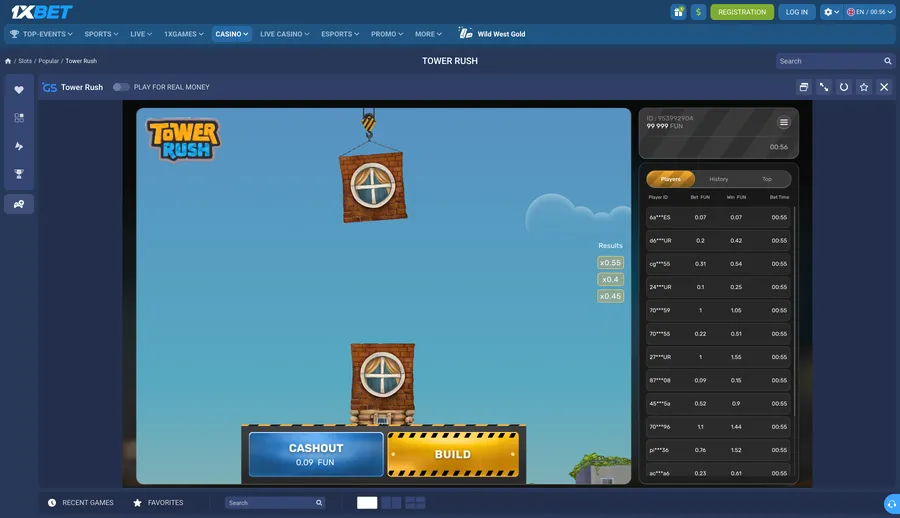
Tower Rush is a crash game in which a crane stacks floors, each floor multiplies the stake, and a misaligned floor collapses the tower. The evidence base for this Tower Rush payout strategy is one sitting of 8 builds, played on the official Galaxsys launcher at a flat 1 Fun stake. 6 of those builds fell within the first 5 floors. Only 2 reached a 6th floor, and both were banked there, at 0.87 and 1.24 Fun.
| Feature | Detail |
|---|---|
| Rounds logged: | 8 builds in a single sitting. |
| Stake per build: | a flat 1 Fun on every round. |
| Builds lost within 5 floors: | 6 of the 8 logged. |
| Best banked result: | 1.24 Fun, banked after six floors. |
| Balance drift over 11 builds: | 5.89 Fun in total. |
| Session date: | the evening of . |
Across the 11 one-Fun builds of that sitting, the play balance moved from 100,000 Fun to 99,994.11 Fun. That drift of under 6 units covers the whole evening. A sample this limited describes one session and leaves the long-run return open. It does show what one evening at a beginner stake looks like.
So what can a strategy change in an evening of this game? The draw stays fixed, and so does the house edge. A strategy moves 3 levers only: unit size, the exit multiplier, and the timing of the tap on Cashout.
Collapse Depth Distribution
Collapse depth in our Tower Rush log clustered early. The third floor ended 2 of the 8 rounds. The remaining rounds ended on floors 1, 2, 4, and 5, according to the round log our analyst kept beside the client. Galaxsys leaves the collapse distribution unpublished, so the table below is a log rather than a probability.
| Collapse floor | Rounds | What the Tower Rush client showed |
|---|---|---|
| Floor 1 | 1 | Cashout grayed out at zero before a second floor landed |
| Floor 2 | 1 | A build that opened high, then misaligned at once |
| Floor 3 | 2 | The most common exit anywhere in the sample |
| Floor 4 | 1 | One build reached a fourth floor and lost the stake there |
| Floor 5 | 1 | The best running value of the session died here |
Figures current as of ; the operator's live terms prevail.
Sub-Unit Coefficients Explained
Sub-unit coefficients shrink a running total instead of ending a build. That arithmetic is the half most write-ups skip. Round 6 opened well. Round 6 then met a sub-unit floor that cut a healthy total back by more than half, and the build still had to be banked by hand, which is what finally happened six floors in at 1.24 Fun.
The Minimum Coefficient is x0.4 on the information panel. An opening floor can therefore hand back two fifths of a stake while the tower stands perfectly upright. Unfortunately, that detail stays invisible until it happens to you in a real round. You'll see the tower standing, the Cashout value shrinking, and the reason for both hidden from view.
Cash-Out Targets This Strategy Supports
Cash-out targets in the 1.5x to 2x band are what this strategy supports. The Galaxsys log makes that band look deliberately modest. Every floor above it asks a build to survive one more independent draw. The log says the third floor is where a build died most often in our sample.
| Exit point | What the log recorded | How we read it for strategy |
|---|---|---|
| After one floor | x0.4 to x2.2 | The floor range our session actually saw |
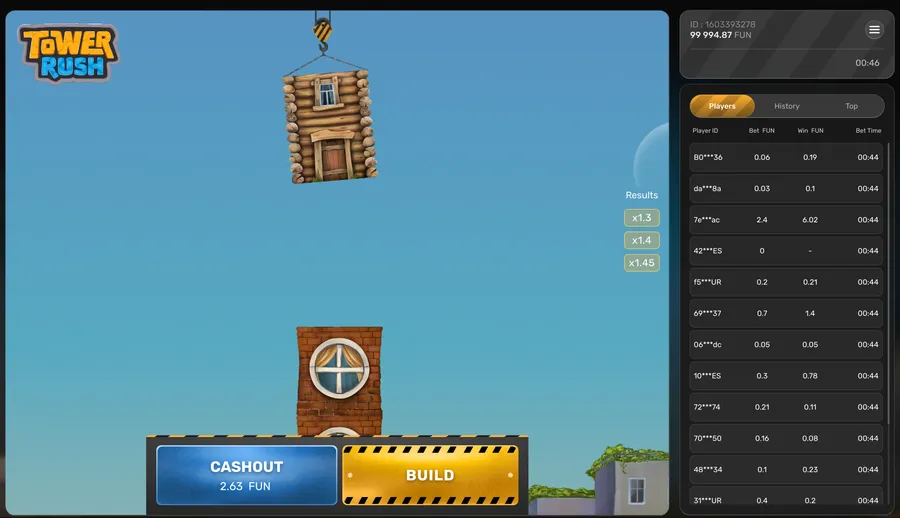
| After three floors | 2.63 and 3.03 Fun | Session peaks, banked at neither value |
| After six floors | 0.87 and 1.24 Fun | One under the 1 Fun stake, one barely above |
Why Shorter Builds Survive
Shorter builds survive on 2 or 3 aligned floors instead of 6. That is the whole reason this strategy survives contact with Tower Rush. Both 6-floor builds in the log were banked at 0.87 and 1.24 Fun, so six aligned floors returned about the stake that bought them. One opening floor in the same log landed at x2.2, which beat both of those results after a single draw, and that build then collapsed on its second floor.
A run of 6 collapses in 8 rounds is a limited sample. Treat the band as a starting point you should test in the demo, because a band that isn't tested is just a number you read somewhere. Any run of 3 clean floors now reads as luck instead of form, and a manual cash-out is what lets you act on that reading at all.
Chasing Taller Towers
A taller tower cost us round 1, the best of the 8 rounds we played. The best running value of the session sat on the Cashout button after 3 floors. The build continued, and a fifth floor took everything, including the stake. Unlike a slot spin, the decision belongs to the player the whole way through, which is what makes the mistake feel avoidable afterwards.
Bankroll Math Behind a Tower Rush Exit
Bankroll math decides how long a Tower Rush session lasts, and a Tower Rush exit is worth nothing if the bankroll is gone before it arrives. Galaxsys leaves the volatility of this crash game unpublished, so bankroll math carries more weight than any cash-out target. Stake limits generally belong to the host casino, so the range of units on offer varies. The practice client runs from 0.1 to 100 Fun, while 1xBet publishes a $0.10 to $100 band on the operator's game page in Nigeria.
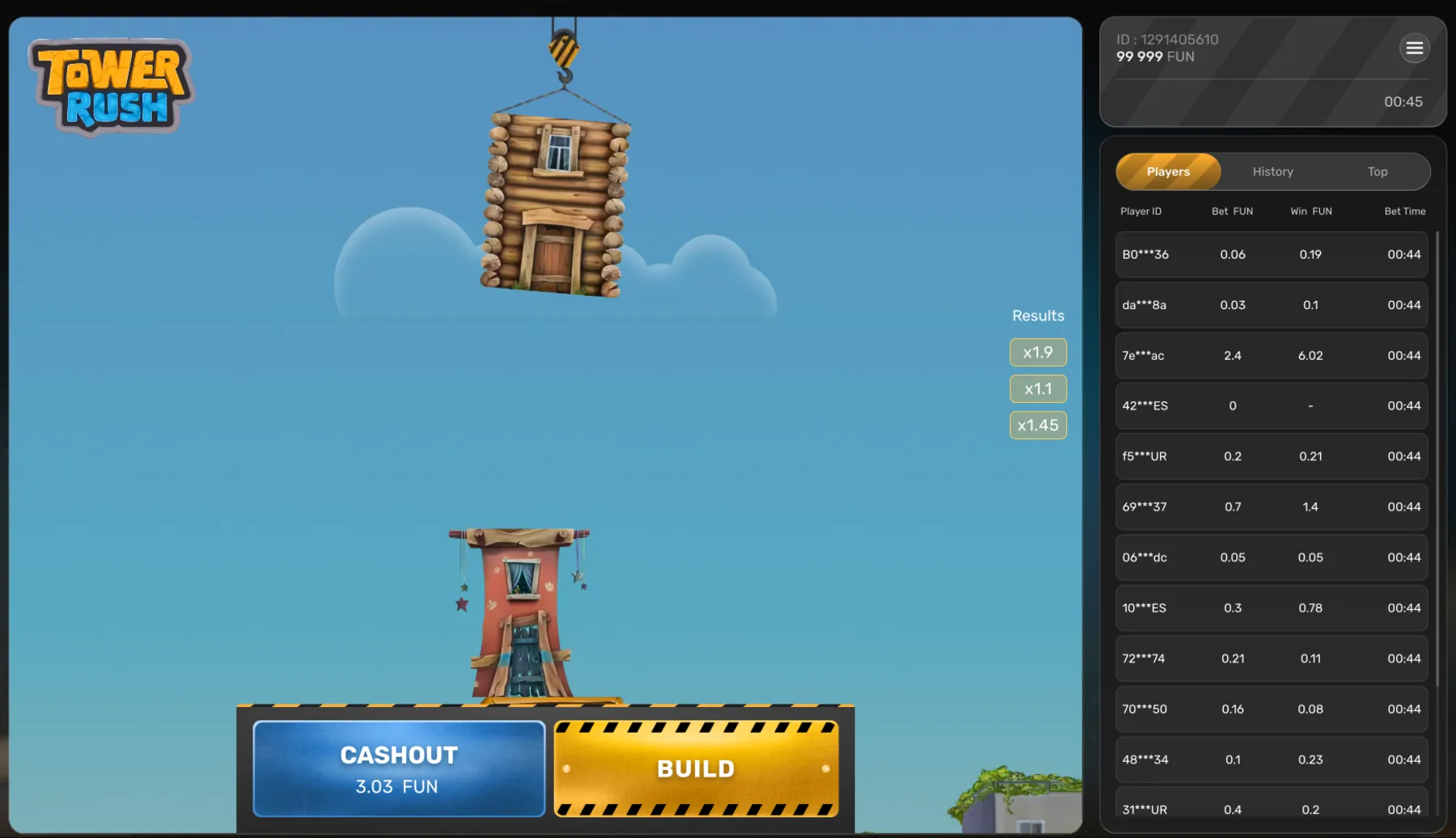
Money itself moves through the casino cashier instead of through the game. Deposits by card, e-wallet, or crypto, withdrawal timings, and verification checks all belong to the casino you register with. A crypto deposit at 1 brand and a card deposit at another can leave the same game behind two very different withdrawal rules. Compare those terms before funding anything, because every one of them lives outside the client.
| Control | What it does in a round | Where you find it |
|---|---|---|
| BUILD | Places the next floor on the tower; Cashout and Build sit side by side | Bottom bar, on the right |
| CASHOUT | Banks the running value and ends the build | Bottom bar, during a round |
| ALL IN | Raises the stake to the client's maximum | Bottom bar, before a round |
| x2 | Doubles the stake currently selected | Bottom bar, before a round |
| Stake stepper | Moves the stake one notch up or down | Bottom bar, on the left |
Proportional Unit Sizing
Proportional unit sizing in Tower Rush should assume a long session. Losses in this format arrive in clusters instead of a smooth drip. Those clustered losses cost 5.89 Fun in total across 11 builds. That rate looks harmless until the same arithmetic meets a $10 unit and a 200-round evening.
A workable floor: keep any single build near 1% of the session budget. Settle the exit number in advance, and read All In and x2 as amplifiers instead of tools. What if none of those rules fit your budget? Then the demo balance is the place to find out, and it costs nothing at all.
Mobile Client Defaults
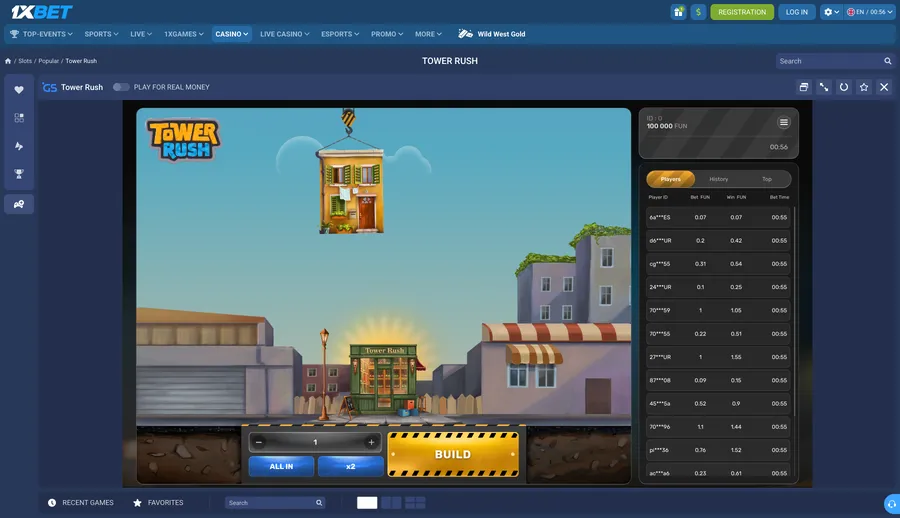
Mobile client defaults in Tower Rush start at a stake of 100 Fun. The mobile default is 100 times the desktop one, so the stepper is the first control to change on a phone. Practice mode provides the same Galaxsys client we opened inside the 1xBet, Stake, and Parimatch lobbies, though every one of those sessions was play money. The return setting and the stake limits are the casino's to configure, so our demo numbers do not carry over to a funded account.
Nothing installs on either device. The launcher opens in a phone or laptop browser, and the demo needs no account at all. A session can therefore start on a laptop and finish on a handset, and the stake stepper is the one control you'll touch on both.
What the Host Casino Sets Around a Game
The host casino sets more of this game than the provider does. A casino picks the return band, the stake limits, any cash cap on a win, and whether bonus funds may be used at all. Galaxsys ships one Tower Rush client, and each casino configures it before the game reaches a lobby.
Published Return Bands Compared
Three published return bands circulate for this game, and comparing them is the only honest option. Galaxsys, the catalogues, and 1xBet disagree, and the disagreement is worth flagging instead of averaging. Galaxsys publishes the widest range as operator-configurable, third-party catalogues list a narrower one, and 1xBet's game information shows that the casino quotes a third. Only the casino you actually play at can say which setting is live, and the table below keeps the 3 figures apart.
| Figure | Published value | Source (provider, catalogue, or casino) |
|---|---|---|
| Provider RTP band | 96.2% to 97.6% | Galaxsys, operator-configurable |
| Catalogue RTP band | 96.12% to 97% | Third-party game catalogues |
| 1xBet RTP band | 96% to 98% | 1xBet game information |
| Minimum coefficient | x0.4 | The client information panel |
| Maximum win coefficient | Unlimited | The client information panel |
| Operator cash cap | about 100x the stake | 1xBet states 100x |
Immutable Game Mechanics
Galaxsys mechanics stay immutable whoever hosts the game. Floors are still drawn one at a time, a misaligned floor still ends the build, and a floor at the x0.4 minimum turned up inside the 1xBet lobby exactly as it did in the provider's own launcher. What a casino does control is the money layer around the game. That money layer is also where a cap can appear without warning.
Availability moves too. According to Parimatch's own lobby API, the same Tower Rush record came back for every country code we sent it, India, Nigeria, and Brazil among them, which shows the game sits in the catalogue rather than which markets can actually open it. The free demo stays available on the provider's launcher with no account at all. The operator lobbies we opened filed the game differently: 1xBet put it under Slots, Parimatch under Burst Games. Placement moves from lobby to lobby, so it's worth checking the current category before you look for the game by name.
Bonus Floors Inside a Tower Rush Build
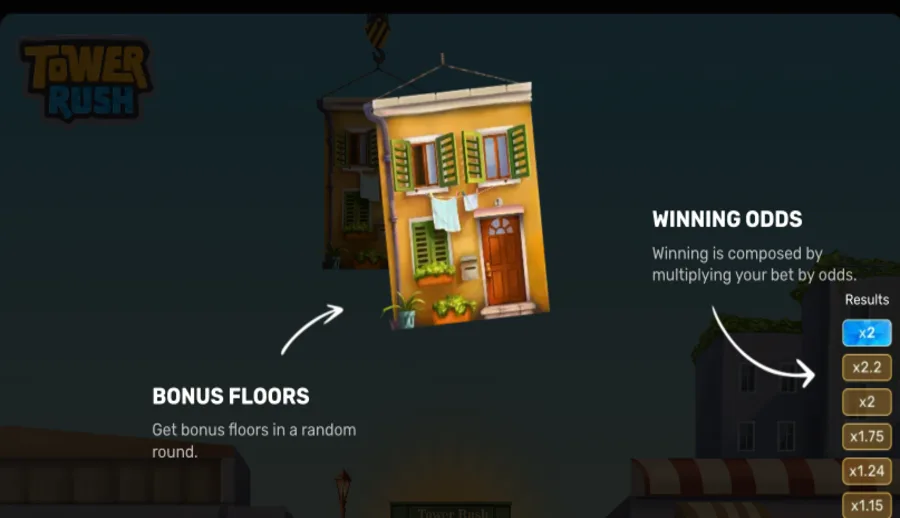
Bonus floors arrive at random in Tower Rush. Randomness puts bonus floors outside a session plan instead of inside one. The Tower Rush client includes 3 of them, and Galaxsys keeps their frequency, their values, and their trigger conditions unpublished.
Frozen, Temple, and Triple Build
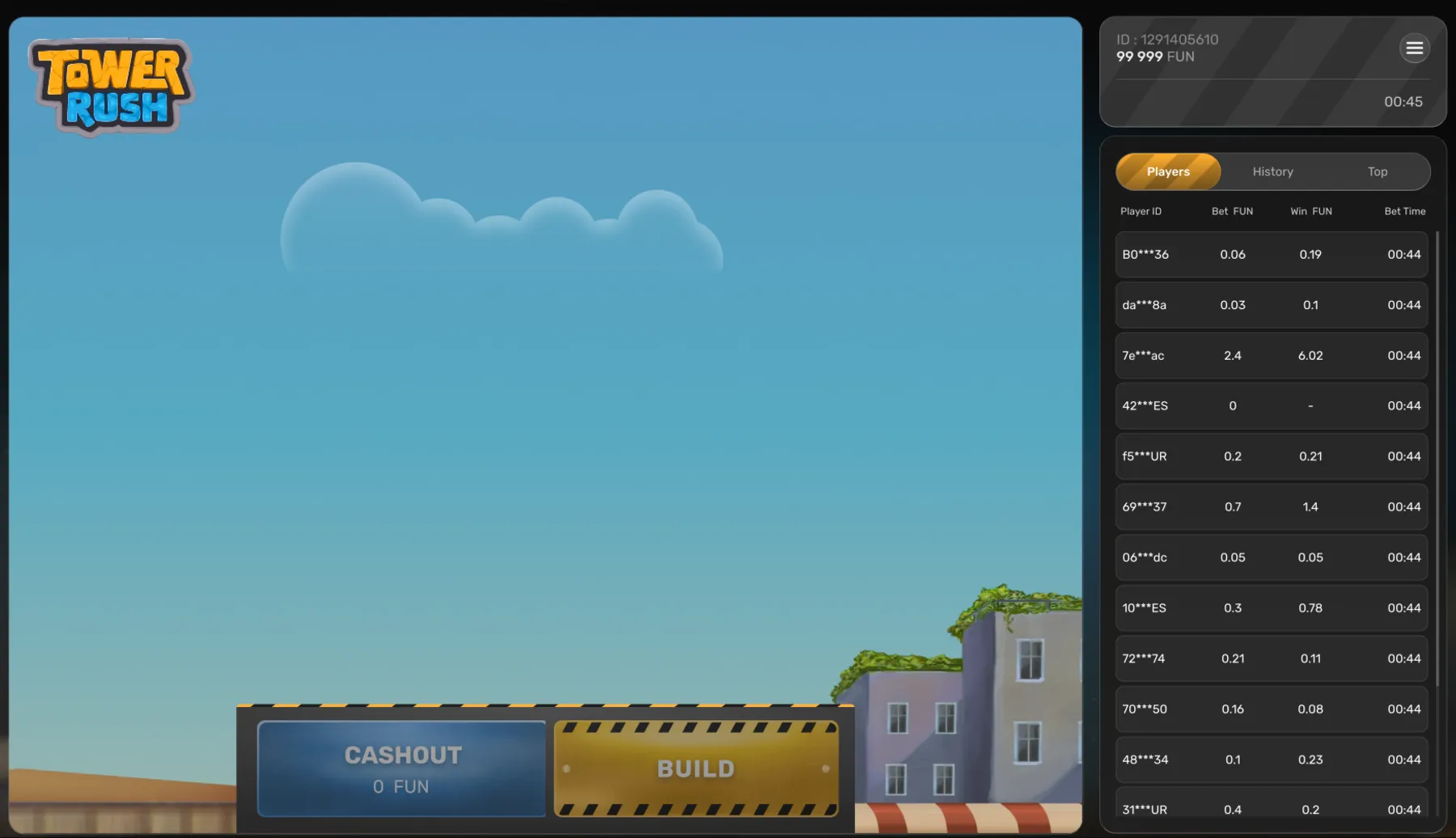
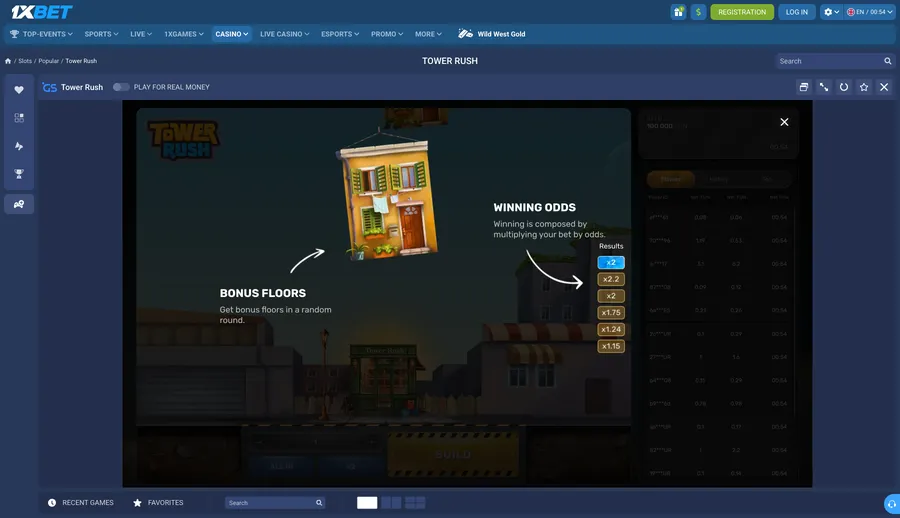
Frozen Floor locks the running bank. Temple Floor and Triple Build are the other two: Temple spins a multiplier wheel across the whole result, while Triple Build stacks 3 floors with the collapse risk suspended. The tutorial overlay the client shows on first load promises bonus floors in a random round without naming them, and they never turned up across the 8 logged rounds.
A reward that arrives on no schedule you control belongs in the entertainment column of a strategy. So does the Top leaderboard in the sidebar. Players, History, and Top are the 3 sidebar tabs, and none of those panels tells you anything about the next floor.
There are no free spins in Tower Rush and no live dealer layer either. Galaxsys files Tower Rush under Fast Games, next to its other crash titles, which is why players arriving from a reel game find the pace so abrupt.
Fairness Behind Every Tower Rush Floor
Fairness behind each floor rests on 2 published mechanisms and 1 gap. Every floor comes off a quantum generator supplied by ID Quantique. Each finished round then exposes a provably fair hash behind the Shield icon, so a player can verify a result after the fact.
The gap is testing. No testing laboratory certificate is published for this game, so there is no GLI or eCOGRA report to point at. Galaxsys implies none either, and neither do we. Galaxsys and Digitain sit inside the same supplier group, and Digitain (MT) Limited is the entity licensed there for critical gaming supply. The Gambling Commission and Malta Gaming Authority hold the records: the UK register lists account 63601, and the Malta register carries a business-to-business entry for Digitain (MT) Limited.
Volatility is likewise unpublished. Galaxsys states no volatility rating for Tower Rush, and third-party catalogues describe the game as high. That is a label covering everything from a minimum floor up to the best running value our session ever saw.
Quantum Randomness Verified
Quantum randomness in Tower Rush means each floor is generated independently of the floor before it, similar to a coin that keeps no memory of the last toss. That independence explains why a streak of 3 clean floors carries no information about the fourth floor. The information panel provides both boundary values in one screen.
Where the Tower Rush Plan Falls Short
The plan behind Tower Rush falls short in 3 places, and all 3 are visible in the current client. Naming the drawbacks matters more than defending a banked cash-out as a method. Exposure is managed, and only exposure; the house edge stays exactly where the casino set it.
Drawbacks Worth Weighing
The clearest drawback is the ceiling question. The client panel prints a Maximum Win Coefficient of Unlimited. Third-party listings describe a per-operator cash cap of roughly 100x the stake, and 1xBet states the same figure on its game page. A cap met at withdrawal is a worse surprise than a cap printed in the lobby.
The second drawback is sample size, because 8 rounds is a thin base for any claim. We didn't expect the third floor to be the modal exit. A sample this small cannot tell you whether it usually is.
The third drawback is the plainest: nothing here improves the odds. It is worth noting that a disciplined exit changes the shape of the loss curve, however it never changes the direction. You should choose a session budget on that basis.
Suitability by Player Profile
Suitability splits by player profile: this strategy is best for a player who wants a fixed exit and a small unit. The same strategy is a poor fit for anyone chasing a single large payout. A beginner should start in the demo and stay there for at least 20 builds. A player who enjoys long shots will find the 1.5x band dull, and should probably pick a different crash game. If neither profile fits, the free demo still answers the question at zero cost.
Contested Published Figures
Contested figures start with the published return band itself. The 3 published bands above come from the provider, from third-party catalogues, and from a casino's own game information. Only the host casino can say which one is live in your account. The demo includes every control of the real lobby but lacks a cashier and real stakes.
Our Tower Rush Verdict After 8 Builds
The verdict after 8 builds is narrow. Cashing out on Tower Rush is the only part of the game a player controls, so any strategy that survives contact with Tower Rush is a rule about exits instead of a rule about floors. The rule here is to take 1.5x to 2x and walk. The unique part of this crash game is that you place every floor yourself, so stopping becomes an explicit decision instead of a reflex on a rising line.
We steer clear of the All In button for anyone building a session plan. The All In button is the fastest way to end a session, because it converts a slow drift into a single flip at the same collapse probability. If you grind small stakes every round of every session, the 1.5x band is the one to test. If you only want to watch the mechanic, the practice client is enough. If none of that fits, the demo still costs nothing and the cashier stays shut.
Collapse depth, the minimum coefficient, bankroll units, bonus floors, and the contested return bands all point one way. The number that matters now is the current one your host casino has configured, and cashing out on Tower Rush is worth exactly what that setting allows. Explore the published figures on RTP Range Explained, read the ceiling question on Max Win Explained, and compare stake floors casino by casino on Where to Play.
Galaxsys released Tower Rush in 2024 and took SiGMA Europe's New Casino Game of the Year award that year. That award tells you the presentation works, and the award leaves the arithmetic where we found it. The mechanic is simple to learn and hard to leave alone, and that, not the math, is the real risk in a game this quick.
Tip: The house edge is structural, because a title built on an operator-configurable return band pays back less than it takes over any long run.
Past floors are noise, similarly to a coin toss: each slab is drawn independently, so the two coefficients stacked in one build predict nothing at all about the next round.
We steer clear of chasing losses with All In, which stakes the whole balance on a single build and turns a slow bleed into one flip of the same coin.
Bonus floors stay unpublished, so a session plan built around the Temple wheel rests on guesswork instead of odds you can check.
Set deposit and time limits before you start, keep the loss cap visible, and don't wait for a good round to stop; walk away for the evening when the game stops being fun.
Key Terms Used on This Page
- Crash game
- A title where a rising multiplier can end at any moment; Galaxsys released this one in February 2024 with floors in place of the usual curve.
- Coefficient
- The multiplier a single floor adds; the Cashout value is the product of every floor coefficient times the stake, and ours peaked at x2.2.
- Cash-out
- The manual exit that banks a build at the value shown on the button; across 8 logged builds ours ranged from x0.4 to x2.2.
- Minimum coefficient
- The lowest floor value the client publishes, printed as x0.4 on the Galaxsys information panel.
- Bonus floor
- A randomly triggered slab — 3 types in all — whose odds Galaxsys leaves unpublished.
- Provably fair
- A published hash that lets a player verify a finished round; this game exposes it through the Shield icon.
Not sure yet? Try the free demo first and learn the round with play money before any deposit.
Try the free demo first →Deposits and identity checks stay on the operator's own secure site.
Related Reading on This Game
More on this game, from the same section first:
 Guides
How to Play
2 controls: Build and Cashout
 Guides
Free Play Demo
100,000 Fun credits, no account
 Reviews
Crash Game Verdict
Our score: 7.4 of 10
 Reference
RTP Range Explained
96.2%-97.6%, set by the casino
 Casinos
Where to Play
2 of 8 casinos verified
 Reference
Max win and cash caps
Max Unlimited, minimum x0.4
What Else Do Readers Ask?
A plan cannot change the odds, so readers ask instead about stake size, exit points, and what eight logged builds did and did not settle.
Is there a sure-fire strategy for Tower Rush?
No. Every floor comes from a quantum generator inside an operator-configurable return band, so play can only manage risk.
What is the best cash-out point in Tower Rush?
Cash-out points are personal, and that's the honest answer. Across 8 logged builds, 6 collapsed within 5 floors, so early exits beat tall-tower patience.
Can a player predict when a Tower Rush tower collapses?
No. Each round draws on a quantum generator with provably fair hashes, so timers and patterns give nothing away.
How did we test this strategy?
Testing ran in the provider's current practice client on 26 September, across 8 one-Fun builds, with both coefficients read off the information panel.
Do bonus floors change the strategy?
Bonus floors change nothing. Frozen, Temple, and Triple Build arrive at random, and Galaxsys leaves their odds unpublished.
Does the Tower Rush demo behave like the real-money game?
Practice rounds run the same client seen inside casino lobbies, though stake limits and the RTP setting belong to the host.
What does a Maximum Win Coefficient of "Unlimited" mean?
Unlimited is what the client panel prints. Third-party catalogues cite about 100x the stake as a casino cash cap, and 1xBet states 100x.
Can bonus balance be used on Tower Rush?
At 1win the canUseBonusBalance flag reads false, so bonus funds stay out of this game there. Other casinos set separate rules.