Table of contents
- Frozen, Temple, and Triple Build Floors
- Bonus Floors Inside a Standard Round
- Frozen Floor: Bonus Insurance
- Temple Floor and Its Bonus Wheel
- Triple Build and the Bonus Floor Stack
- Bonus Floor Frequency and Odds
- Floor Coefficients We Logged
- Demo Session Floor by Floor
- Drawbacks and Unpublished Numbers
- Key Terms Used on This Page
- What Else Do Readers Ask
Frozen, Temple, and Triple Build Floors
Bonus floors in Tower Rush are special floors that land at random inside a round already in progress in the Galaxsys crash game: Frozen Floor banks the win so far, Temple Floor spins a wheel over the whole total, and Triple Build lays 3 collapse-proof floors. Galaxsys keeps the trigger odds to itself.
- Game:
- Tower Rush (a Galaxsys crash / Fast Games instant game)
- Type:
- Crash game
- RTP as published:
- 96.2%-97.6% (operator-configurable range)
- Max win:
- No fixed cap published; the game client shows an "Unlimited" maximum coefficient, so any hard multiplier you see elsewhere is an operator cash cap, not the game's
Bonus Floors Inside a Standard Round
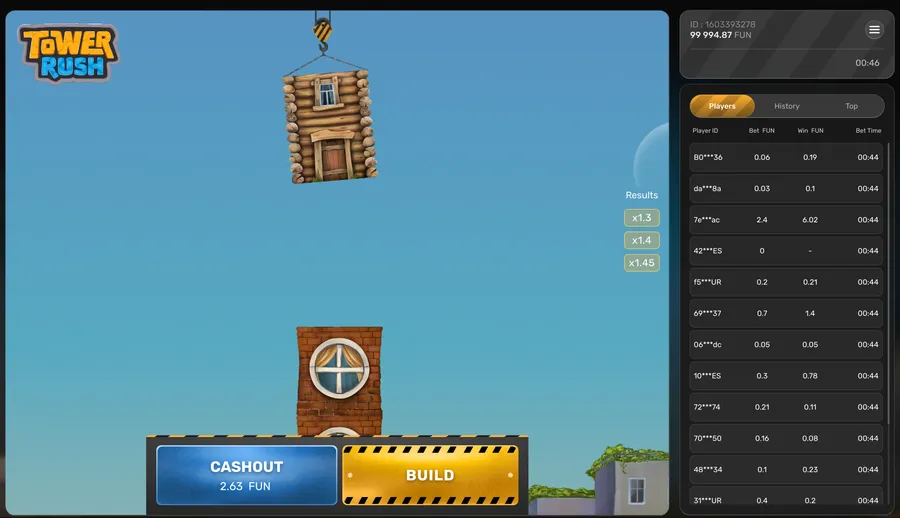
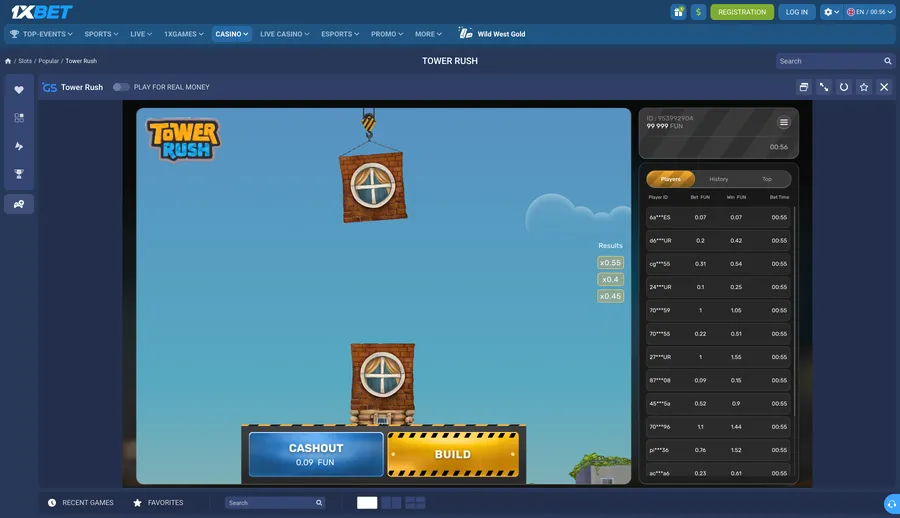
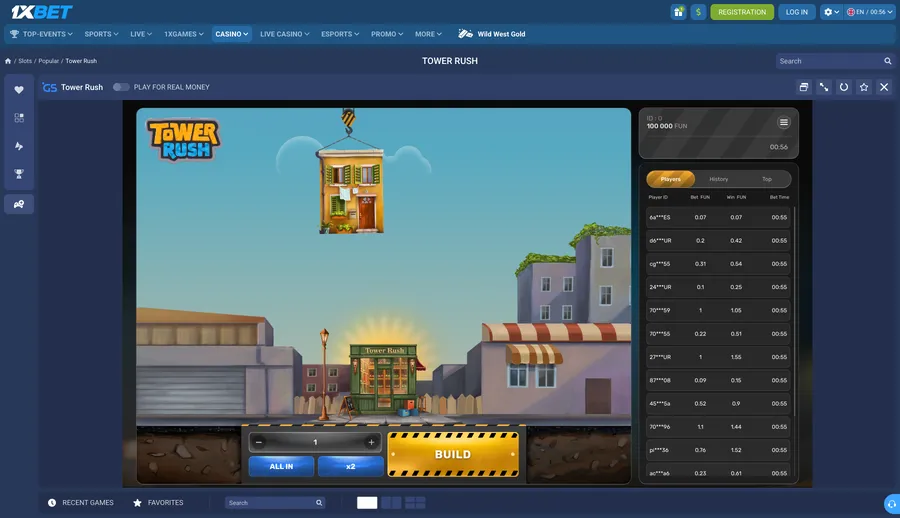
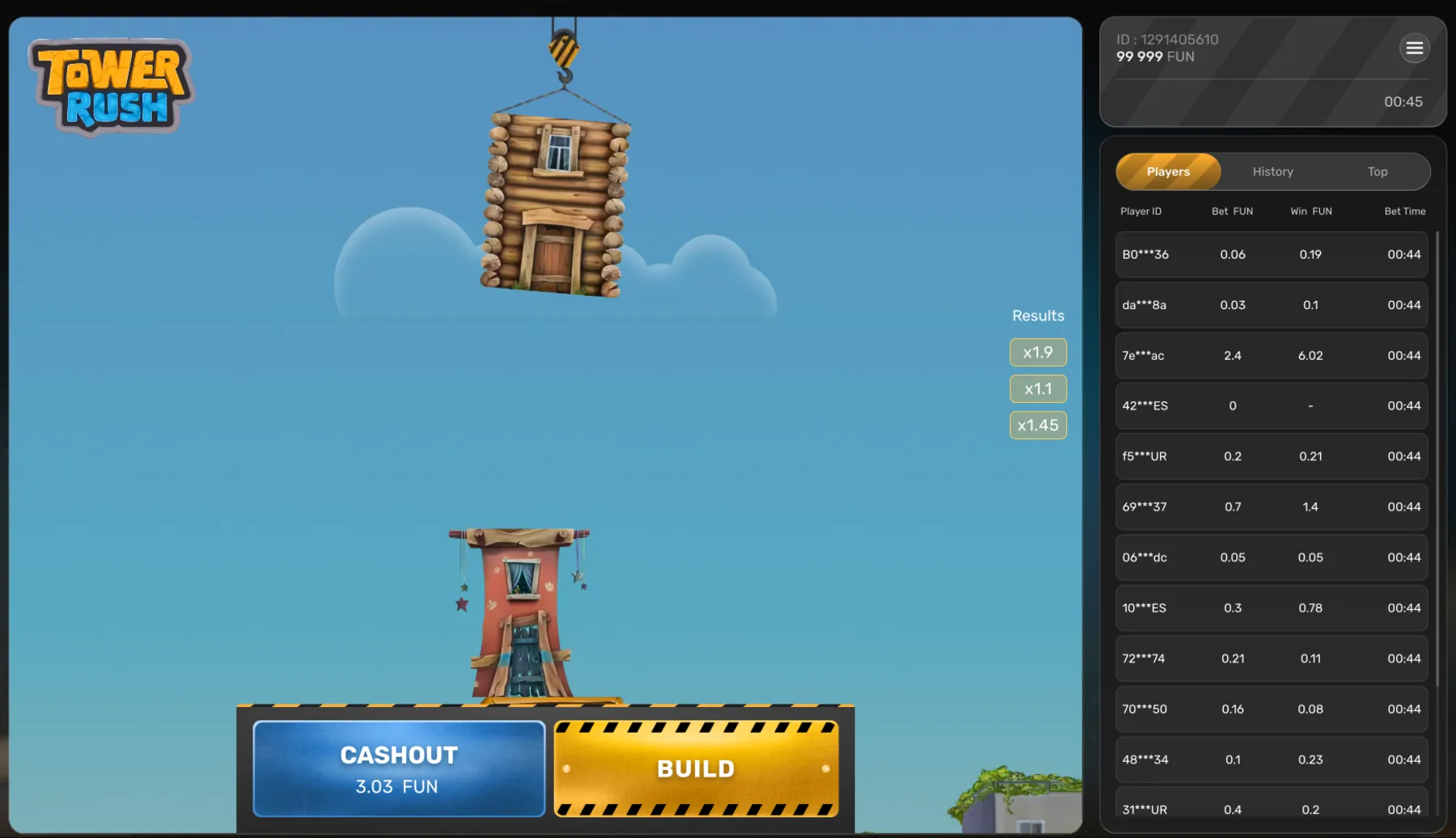
Bonus floors sit inside an ordinary Tower Rush round, so the ordinary round comes first. Unlike most crash games, which run one rising curve, Tower Rush builds its multiplier floor by floor; the client files the title under its Fast Games category. A crane lowers each floor onto the tower. The player presses Build, and that floor's coefficient multiplies into the running total. The bottom bar carries Build, Cashout, All In, plus an x2 shortcut; those options and the stake stepper are the whole interface. One misaligned floor collapses the tower, taking any uncashed stake with it.
Bonus floors are the exception to that rule: they belong to the game itself rather than to a casino promotion. Instead of collapse risk, bonus floors hand builders a guarantee, a multiplier, or a free stack of floors. Several bonus floors can land inside a single round, and that round still ends with a manual cash-out.
All 3 arrive at random, and the bottom bar leaves that entirely to the round.
| Bonus floor | What it does | Values published |
|---|---|---|
| Frozen Floor | Banks the running total against a later collapse | Unpublished |
| Temple Floor | Spins a wheel over the accumulated total | Unpublished |
| Triple Build | Drops 3 collapse-proof floors in one move | Unpublished |
Figures current as of ; the operator's live terms prevail.
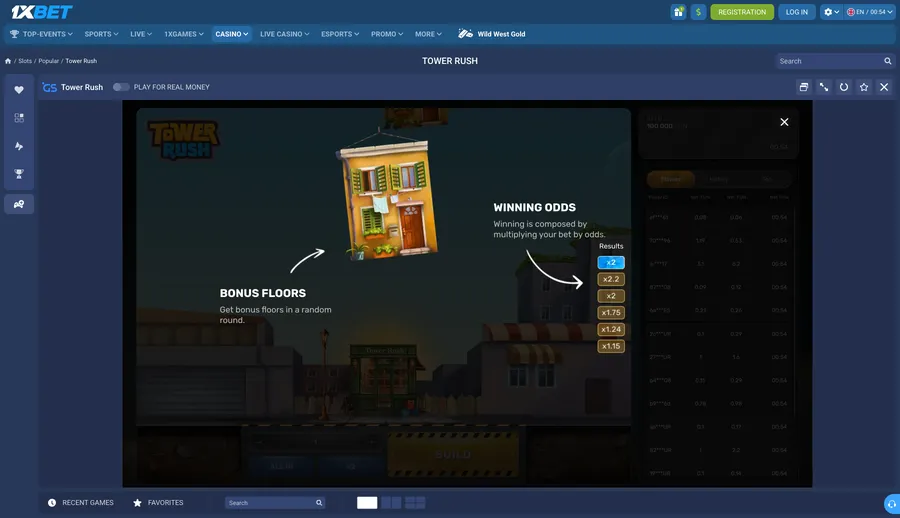
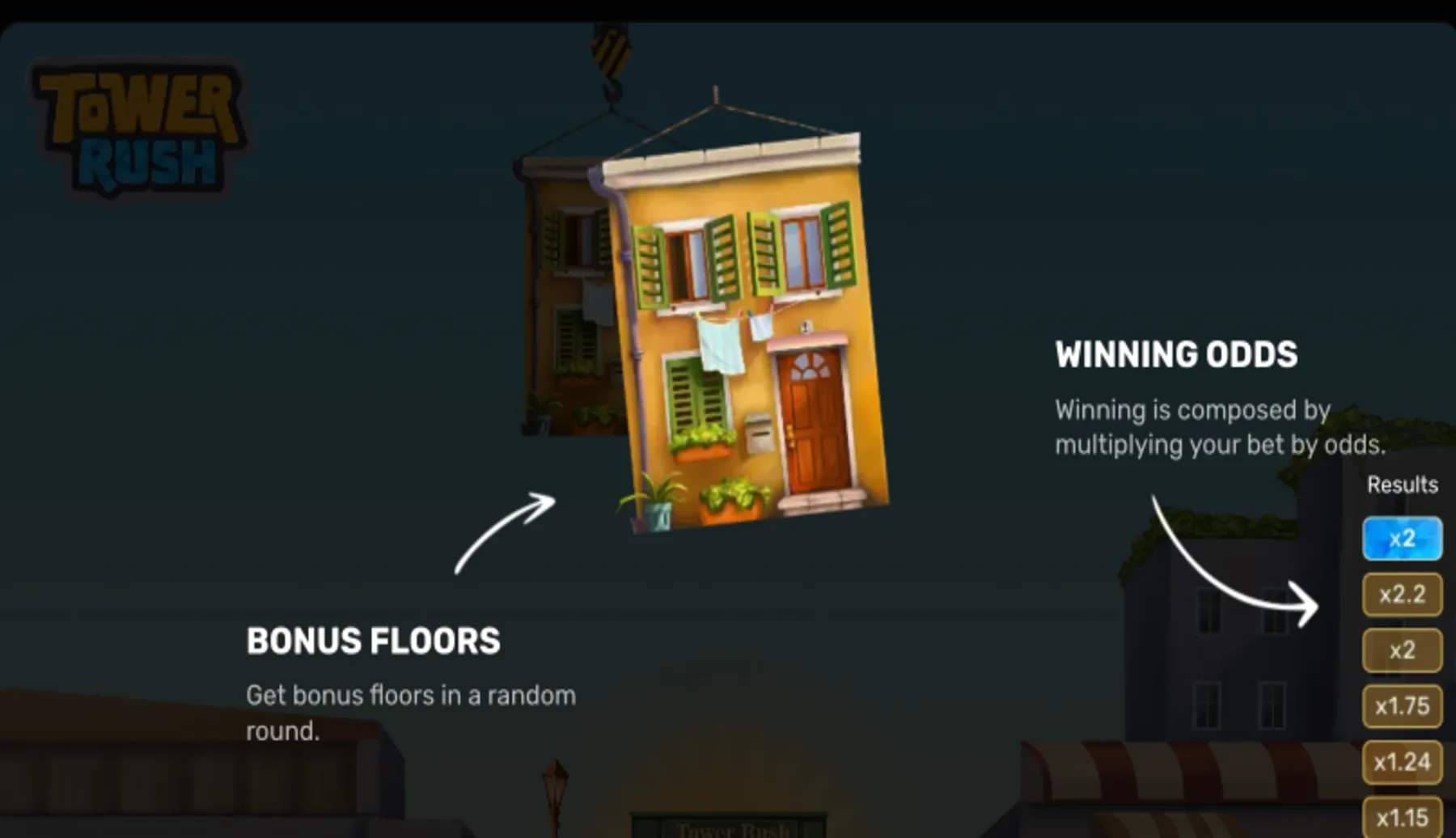
When the intro tutorial loads, the client states its whole policy in one line: get bonus floors in a random round. That single line is the only frequency guidance Galaxsys gives anywhere inside Tower Rush. The tutorial overlay beside it lists more than 5 example coefficients, all borrowed from a demonstration rather than a real round.
Because the 3 arrive on the studio's schedule rather than the player's, they belong to variance. Players who want a trigger rate, a wheel paytable, or even a rough frequency band come away empty. Galaxsys stays quiet here, the operator pages stay silent, and so does every listing we checked.
Frozen Floor: Bonus Insurance
Frozen Floor is bonus insurance: it fixes the coefficient the tower has reached, and that figure survives a later collapse. What sets it apart from the other 2 is that guarantee, which a cautious builder will value more the earlier it arrives.
Say a Frozen Floor lands while the running coefficient reads x2.3: Tower Rush then banks x2.3. A misaligned floor two taps later still leaves that frozen amount on the table. Collapse protection belongs to this floor alone, and it appears once inside a round at most.
Frozen Floor Payout Example
Because the frozen figure is only the product of coefficients placed up to that point, a Frozen Floor payout uses ordinary cash-out arithmetic. 1xBet lists Tower Rush stakes from $0.10 to $100 per round. Frozen coefficient x2.2, for example, converts a $1 stake into $2.20, while a $100 stake yields $220.
Still, the demo withheld a Frozen Floor throughout our session. The Frozen Floor example above is arithmetic rather than a screenshot. We prefer published arithmetic over an estimate dressed up as a test result.
Temple Floor and Its Bonus Wheel
Temple Floor opens a bonus wheel, and that wheel multiplies the accumulated total, not the next step alone. Temple Floor is the flashiest of the 3, and Galaxsys documents it least. Temple Floor could also outweigh every floor beneath it.
Although some third-party catalogues describe a wheel reaching roughly x7, Galaxsys keeps the segment list unpublished. We flag numbers like that x7 unconfirmed instead of repeating catalogue figures. Galaxsys stayed silent throughout our checks.
Temple Floor Segments Stay Unverified
Because the segments are unpublished, nobody outside Galaxsys can calculate what the wheel pays. Tower Rush publishes one minimum coefficient plus an unlimited maximum, and stops there; wheel segments stay unpublished. Documentation stops there.
Compared to a slot free-spins round, where the paytable sits on screen, this wheel stays undocumented. A wheel multiplying the entire accumulated total creates Tower Rush's largest single swing. Its distribution decides how often a long build is worth holding.
Lacking that distribution, every sentence about the best moment to keep building is decoration. Sites quoting a precise frequency deserve the same skepticism.
Triple Build and the Bonus Floor Stack
Triple Build is the bonus floor stack of the set: 3 floors placed in one move, all collapse-proof. Each of those 3 floors carries a coefficient above x1. The total jumps once instead of surviving 3 separate taps of Build.
Once a Triple Build resolves, the round carries on with ordinary floors. Any ordinary floor can still bring the tower down.
Triple Build Versus a Manual Stack
Triple Build is the better outcome. A manual stack of 3 floors carries 3 chances to misalign, whereas the bonus version carries zero. During our logged rounds, 6 of 8 towers collapsed within 5 floors. That is exactly the risk Triple Build removes for one move. Its whole appeal lasts exactly one move.
Bonus Floor Frequency and Odds
Bonus floor frequency stays unpublished at Galaxsys. What each bonus floor does is simple; how often it arrives stays unpublished. Operator pages we read, including 1xBet's own game page, stay quiet about it too, which was still true at our latest check. Because the studio keeps its trigger rate private, every frequency claim printed elsewhere is guesswork about an undisclosed probability.
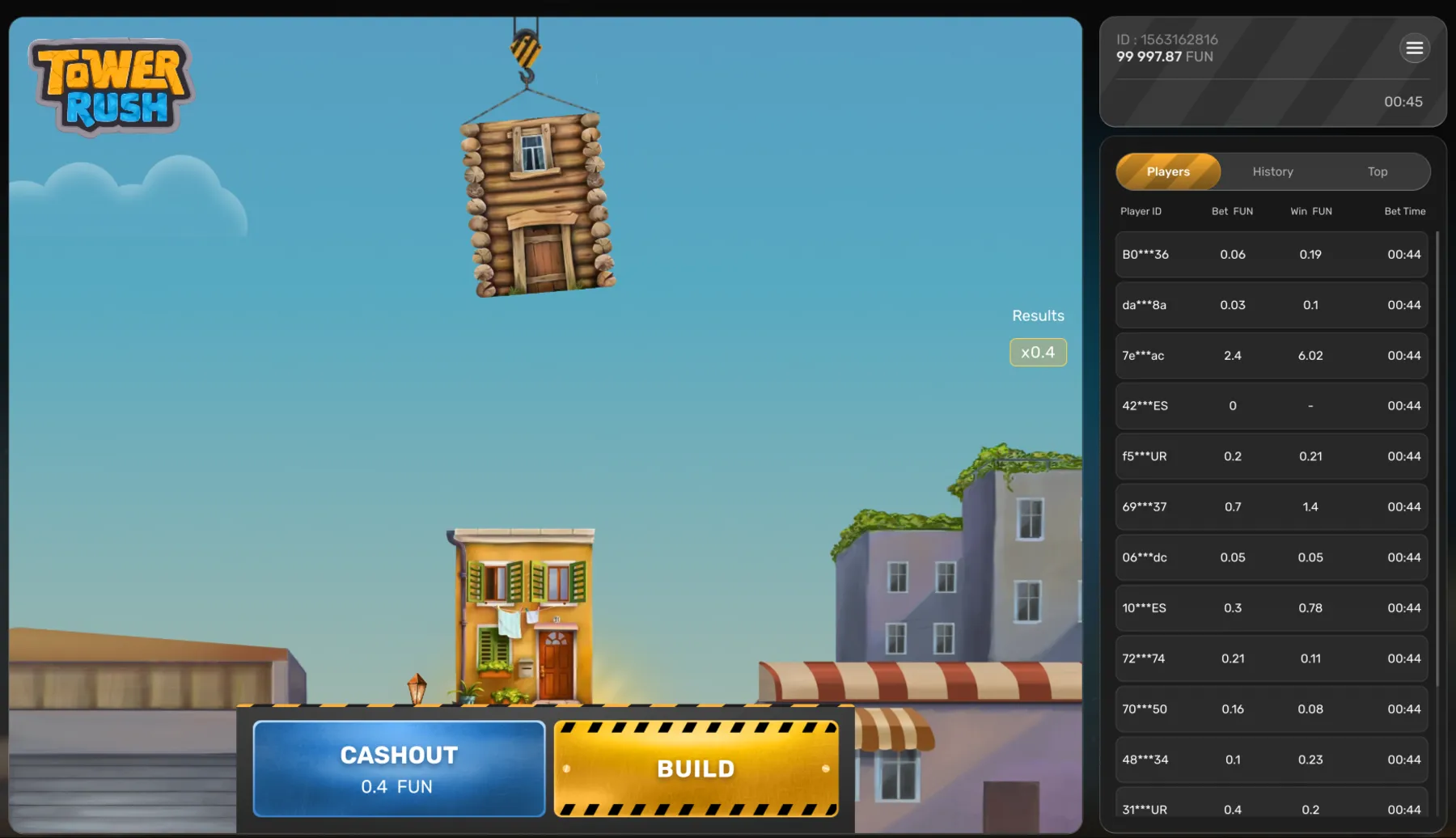
We tested the game across 11 one-Fun rounds in the official demo, and the 8 rounds captured in our log show no bonus floor at all. A run that short settles little about frequency, so we publish the count and leave the rate open. As of this writing, the trigger rate for every bonus floor remains unpublished.
Client Information Panel
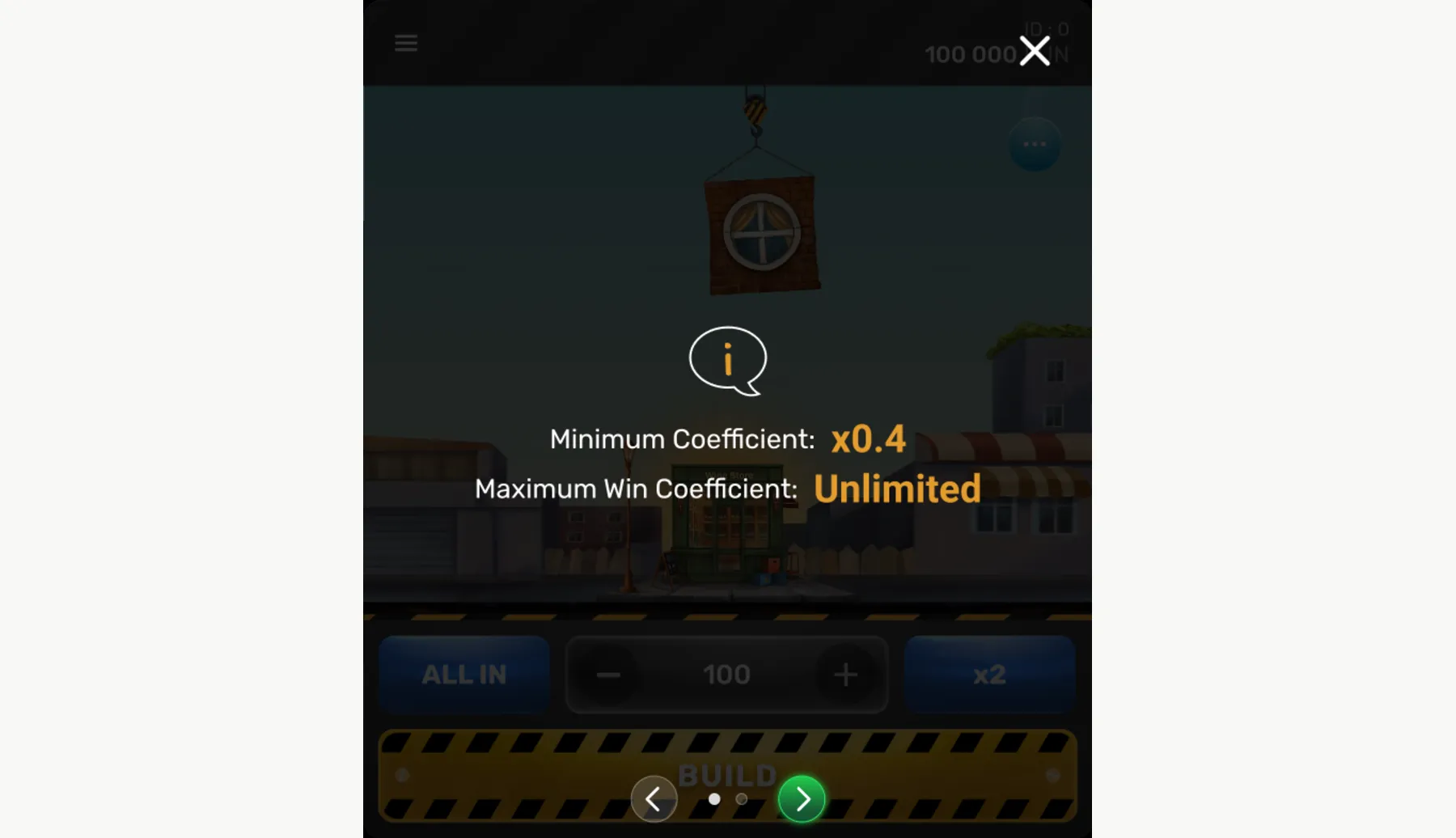
The client information panel is short. Unpublished entries outnumber published ones:
| Feature | Detail |
|---|---|
| Minimum coefficient: | x0.4 |
| Maximum win coefficient: | Unlimited |
| Bonus floor trigger rate: | Unpublished |
| Temple wheel segments: | Unpublished |
So a round can return less than a stake without any collapse. Cashout read 0.40 Fun on a 1-Fun bet after the opening floor landed at the x0.4 minimum floor coefficient. Stake size and coefficient stay independent, and the x0.4 minimum holds at any stake.
Galaxsys names 3 bonus floors for the title, while the client itself leaves their arrival to the round. The panel prints limits such as the minimum coefficient. Odds stay off both lists.
Floor Coefficients We Logged
Floor coefficients we logged in the demo ran from x0.4 to x2.2, a range of values that includes x1.0 floors leaving the total untouched. Because a floor below x1 shrinks the running total instead of collapsing the tower, a six-floor build can pay less than a three-floor one.
| Round | Floors placed | Cashout shown | Outcome |
|---|---|---|---|
| Round 1 | 3 | 3.03 Fun | Collapsed on floor 5 |
| Round 2 | 6 | 0.87 Fun | Cashed out |
| Round 3 | 1 | 0.40 Fun shown | Collapsed on floor 3 |
| Round 4 | 1 | 2.20 Fun | Collapsed on floor 2 |
| Round 6 | 6 | 1.24 Fun | Cashed out |
After 8 logged rounds the pattern is clear: extra floors and extra value part company. Our best running figure reached 3.03 Fun after only 3 floors, nearly 3 times a 1-Fun stake.
Compared to one high floor, a long chain of small ones is poor value. At least 3 of our logged coefficients sat below x1. Round 2 reached 6 floors yet still offered only 0.87 Fun, below the 1-Fun stake that paid for it.
Collapse Pattern Across 8 Rounds
Collapse timing stayed early across our 8 logged rounds. One tower fell on floor 1, another on floor 2, two more on floor 3, one on floor 4, and one on floor 5. Two rounds survived to floor 6, and both cashed out under 1.3 Fun.
| Feature | Detail |
|---|---|
| Collapse on floor 1: | 1 round |
| Collapse on floor 2: | 1 round |
| Collapse on floor 3: | 2 rounds |
| Collapse on floor 4: | 1 round |
| Collapse on floor 5: | 1 round |
| Survived to floor 6: | 2 rounds |
A bonus floor had every one of those floors to appear on, and it took none of them. Those numbers describe one short session, and they carry no predictive weight whatever.
A collapse costs the whole stake. Avoiding that collapse requires a manual cash-out, because the game leaves that call to the player. The demo's Top leaderboard showed a play-money leader at x1033.48, more than 1,000 times the bet. Those Fun credits belong to practice play: no withdrawal follows a demo payout.
Demo Session Floor by Floor
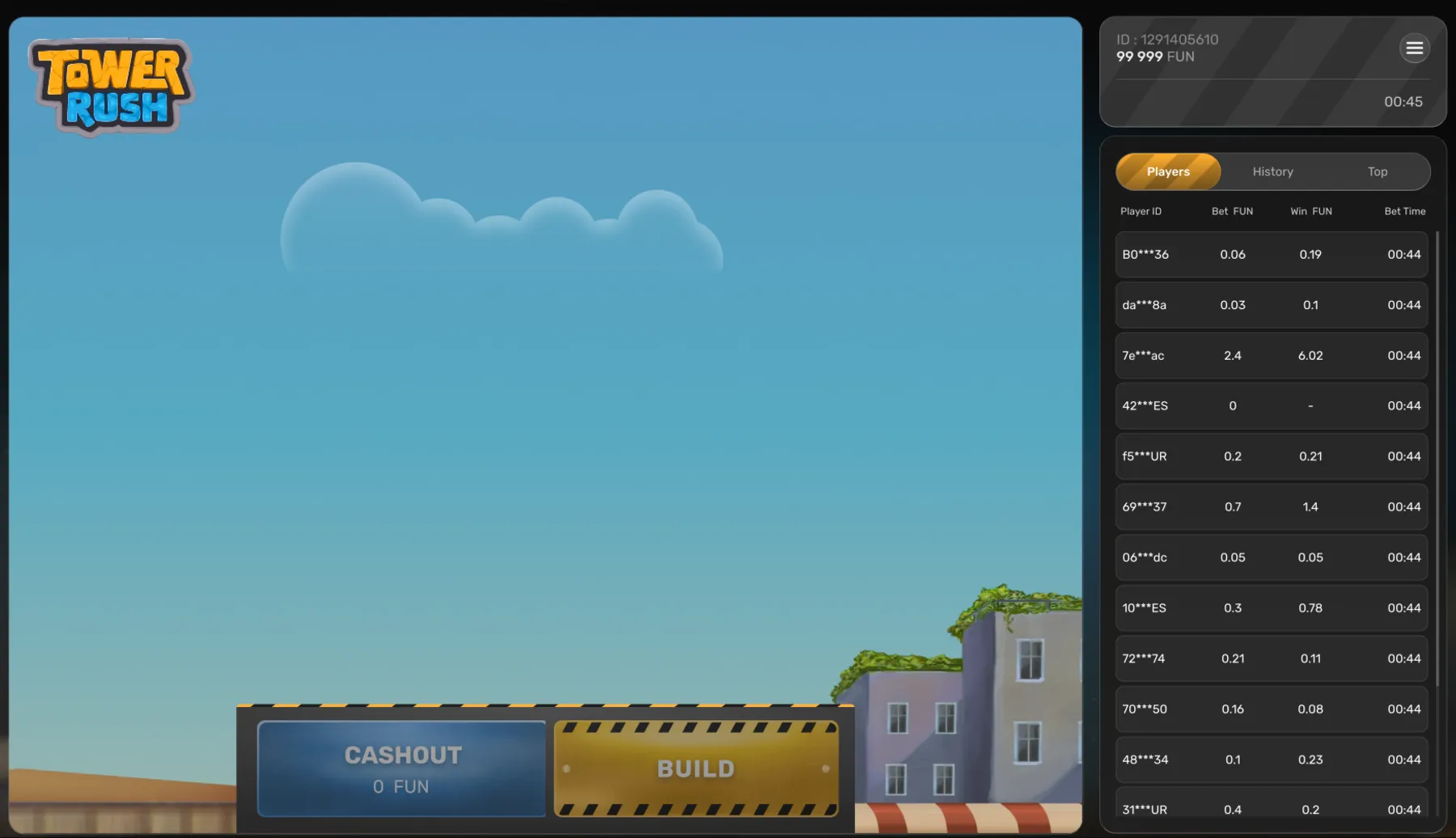
Our demo session ran floor by floor on the official Galaxsys launcher. To verify the mechanics hands-on, we cleared the 18+ gate and started with up to 100,000 Fun in play money. Galaxsys, a Digitain Group studio, publishes that launcher itself, so operators embed this exact client. The launcher offers a practice balance plus a live player feed.
| Feature | Detail |
|---|---|
| Launcher: | galaxsys.co desktop and mobile demo |
| Demo balance: | 100,000 Fun |
| Default desktop stake: | 1 Fun |
| Rounds logged: | 8 |
| Bonus floors seen: | zero |
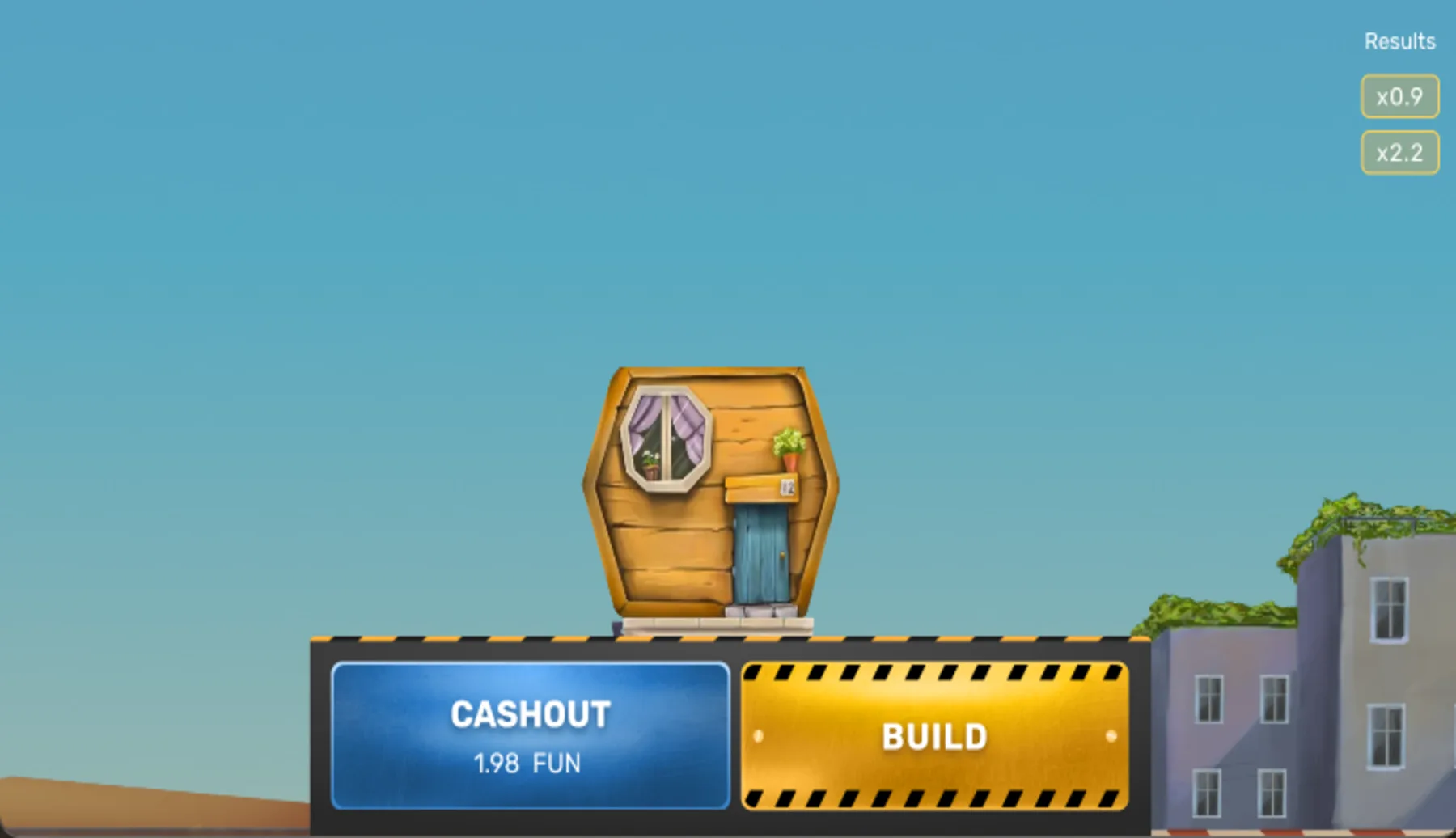
We pressed Build, watched the Cashout figure climb, then banked one round at 1.98 Fun against a 1-Fun bet. We measured that 1.98 payout against the Results strip, which features every floor coefficient in the current build. The strip explains it: x0.9 multiplied by x2.2 across 2 floors. Results read live from the current build, not a list of earlier rounds. Read that way, the strip is a reliable record of the tower in front of you.
Both launchers are web pages: Galaxsys publishes one demo URL for the desktop version and one for mobile, and we opened each in a browser. The Players tab streams other demo users' bets in real time. The free demo is available without an account, and our run skipped the deposit step entirely.
We also opened the game in the 1xBet Nigeria lobby, where that lobby files it under Popular. That lobby's play-for-real-money toggle sat off. Three sub-x1 floors dragged a 1-Fun round down to 0.09 Fun. Zero bonus floors appeared in either place.
Mobile Client Differences
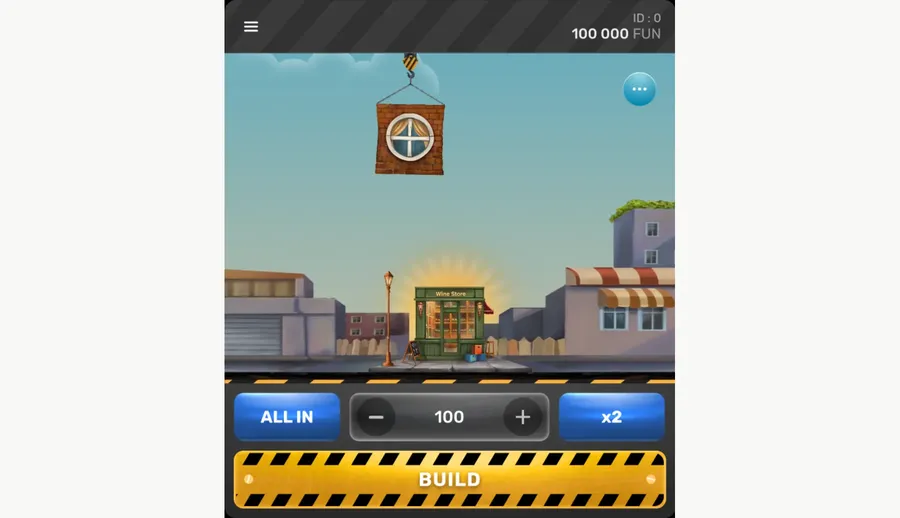
Mobile clients differ from desktop in small ways. The mobile demo opens with a 2-slide info overlay, and slide 1 prints a Minimum Coefficient of x0.4 beside a Maximum Win Coefficient of Unlimited. Default stake also changes: mobile starts at 100 Fun, desktop at 1 Fun.
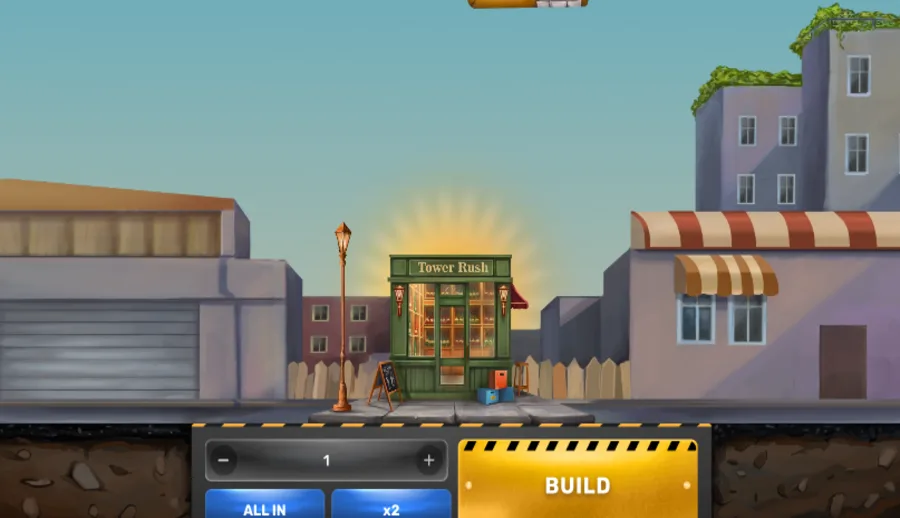
Scene dressing shifts too. The mobile shopfront reads Wine Store, while the desktop shopfront reads Tower Rush. We compared the two clients side by side, and neither one produced a bonus floor.
Sidebar tabs carry 3 separate feeds. Players lists other demo users' bets, History has our own rounds by Round ID, and Top ranks the biggest play-money wins.
Drawbacks and Unpublished Numbers
The drawback is the obvious one. Every number that matters here is unpublished, and that gap covers everything including trigger rates, wheel segments and per-floor odds. Long-run return is the figure 3 sources disagree about, and we list every one of them instead of averaging them away:
| Feature | Detail |
|---|---|
| RTP range published by Galaxsys: | 96.2% to 97.6% |
| RTP listed in third-party catalogues: | 96.12% to 97% |
| RTP claimed on 1xBet's own game page: | 96% to 98% |
| Volatility rating from Galaxsys: | Unpublished |
Because each gambling operator picks that setting, two casinos can run the same title at different long-run returns. Galaxsys also omits any volatility rating from its published sheet, so the returns figure stands alone. Third parties call it high, but they keep their working private, and a volatility label of that kind is an industry habit, not a Galaxsys figure.
A fixed max-win cap is absent as well. Tower Rush shows an Unlimited win coefficient beside its x0.4 floor minimum. Third-party listings cite a cash cap of around 100 times the stake, which on a $100 bet comes to $10,000 in cash terms.
Unlike a slot bonus round, the weak point here is disclosure rather than arithmetic. The trade-off lands on the player: hold for a bonus floor that may never arrive, or bank a modest coefficient now. Which number would actually help? A published trigger rate. Publishing one trigger rate would cost Galaxsys almost nothing, and it would let players judge whether a long build repays the collapse risk.
Fairness Checks a Player Can Run
Fairness checks are the one area here with a published procedure. Galaxsys pairs a Quantum RNG from ID Quantique with a Provably Fair panel, reachable through the shield icon inside the client. That panel exposes a round hash, and to verify the result yourself you need the Key and the Salt the round closed with.
Verification covers round outcomes, not bonus floor frequency. A hash proves one round went unaltered, and it says nothing about how often Frozen Floor arrives.
Which Bonus Floor Actually Matters Most?
Frozen Floor matters most, because it alone changes what a collapse costs. Temple Floor pays more when it lands. Triple Build shortens the odds for one move, yet neither protects a build already in profit.
So choose on temperament, and compare the 3 against your own cash-out habit. If you want a guarantee more than a jackpot, you should hold out for Frozen Floor. If you chase long towers instead, you will find Triple Build the closest fit, depending on how much variance you accept.
We advise against building any Tower Rush session plan around bonus floors. Before you start a session, treat them as background noise and pick a stake you would accept losing. Try the demo first: it loads with a 100,000 Fun balance and a 1 Fun default stake.
Digitain (MT) Limited holds the Malta B2B licence MGA/B2B/592/2018 behind this Galaxsys title, which makes the client licensed B2B software. The same company appears on the UK Gambling Commission register under account number 63601. Its client includes a Provably Fair panel behind the shield icon.
No named testing laboratory appears anywhere against this title. We say so rather than borrow a test lab name from another release in the Fast Games range.